Norfolk Island
Why visit Norfolk Island
Norfolk Island is a small volcanic island in the South Pacific, around 1,600 kilometres north-east of Sydney, with green ridges, high sea cliffs and the distinctive silhouette of Norfolk Island pines. It is an Australian external territory with a close-knit community and a cultural identity unlike the mainland. Kingston’s Georgian buildings and ruins sit beside a lagoon and reef, while farms, forest and settlements spread across the plateau above. The island’s appeal comes from this unusually dense meeting of Polynesian, colonial, Pitcairn and contemporary island stories within a landscape compact enough to explore slowly.
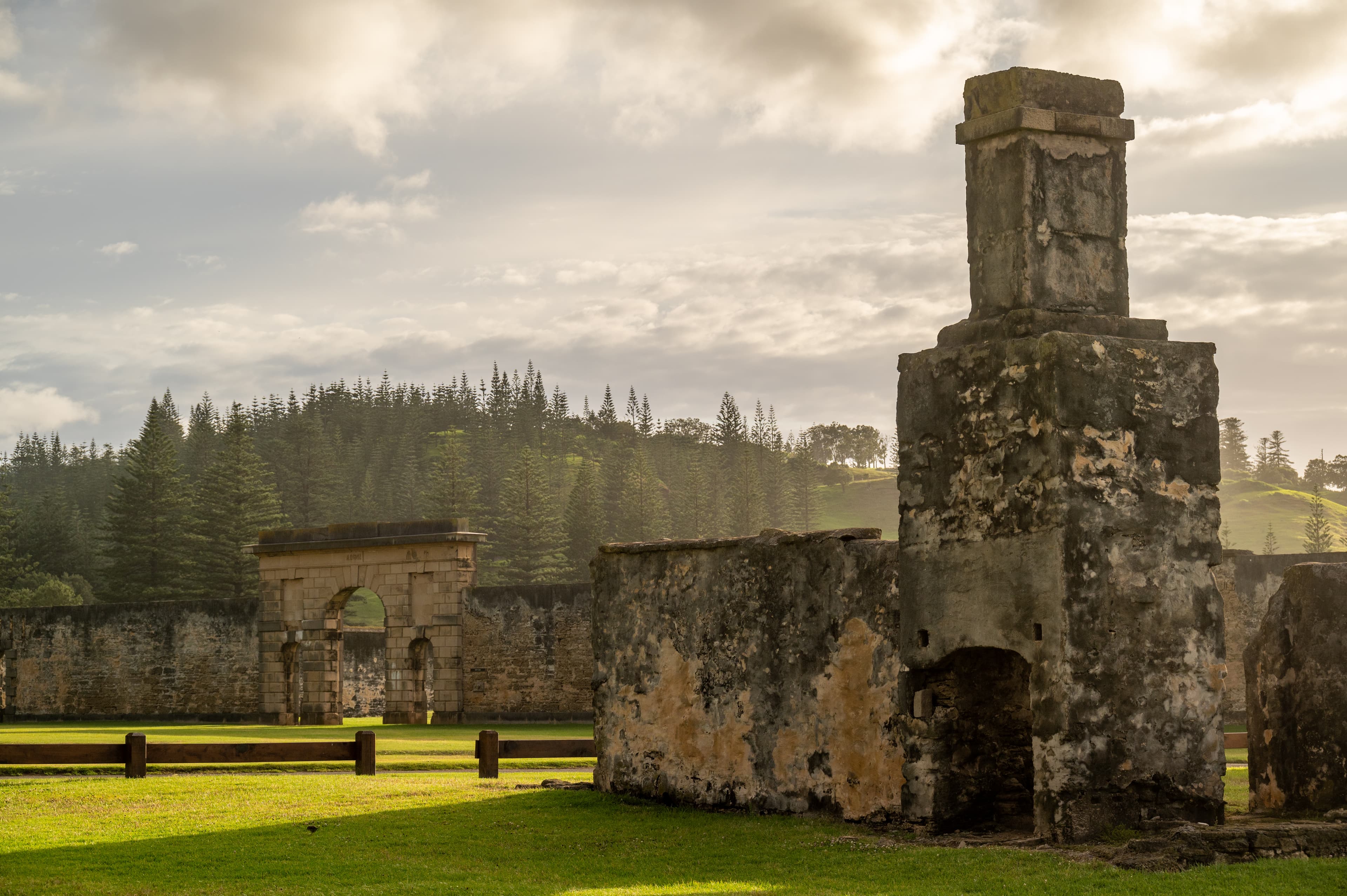
Kingston and Arthur’s Vale Historic Area is part of the Australian Convict Sites World Heritage property, but it is also a living cultural and recreation space for island residents. Museums, restored buildings, cemeteries and archaeological sites reveal several settlement periods, while Emily Bay offers sheltered swimming and snorkelling when conditions suit. Norfolk Island National Park protects native forest around Mount Pitt and Mount Bates, with walking tracks and broad ocean views. Elsewhere, coastal lookouts, local produce, fishing, gardens and community events provide experiences grounded in everyday island life rather than a purpose-built resort environment.
Archaeology records a Polynesian settlement centuries before Europeans arrived. Britain then established colonial and penal settlements from 1788, using convict labour and dramatically altering the island and its people. In 1856, the Pitcairn Island community, descended from Tahitian women and the Bounty mutineers, relocated to Norfolk and made homes among the former settlement buildings. Their descendants helped shape Norf’k language, family traditions, food and annual commemorations that remain central today. Later arrivals have added to the community, while Kingston preserves the connections and tensions between these histories rather than reducing the island to its convict ruins.
Regular flights provide the main connection from Australia and New Zealand, and the airport is close to the island’s accommodation areas. Hire cars, bicycles, taxis and organised tours are available, with driving the most flexible way to reach dispersed lookouts and trailheads. There is no large public transport network, but distances are short and many central services cluster around Burnt Pine. Accommodation ranges from apartments and cottages to guesthouses and small hotels, with capacity more limited than a major coastal destination. Visitors should plan around flight availability, biosecurity requirements and island opening patterns without relying on mainland-style late-night or round-the-clock services.


© Norfolk Island Tourism
Experiences in Norfolk Island
WānaTravel partners with Viator and GetYourGuide so you can browse and book experiences directly. Prefer a personal touch? Contact WānaTravel and we'll add it to your itinerary for you.
WānaTravel partners with Viator and GetYourGuide so you can browse and book experiences directly. Prefer a personal touch? Contact WānaTravel and we'll add it to your itinerary for you.
Practical Information
Travel essentials, government safety advisories and The Out Index score for Norfolk Island.

Out Score of Norfolk Island
Out Score of Norfolk Island
65
Tier B