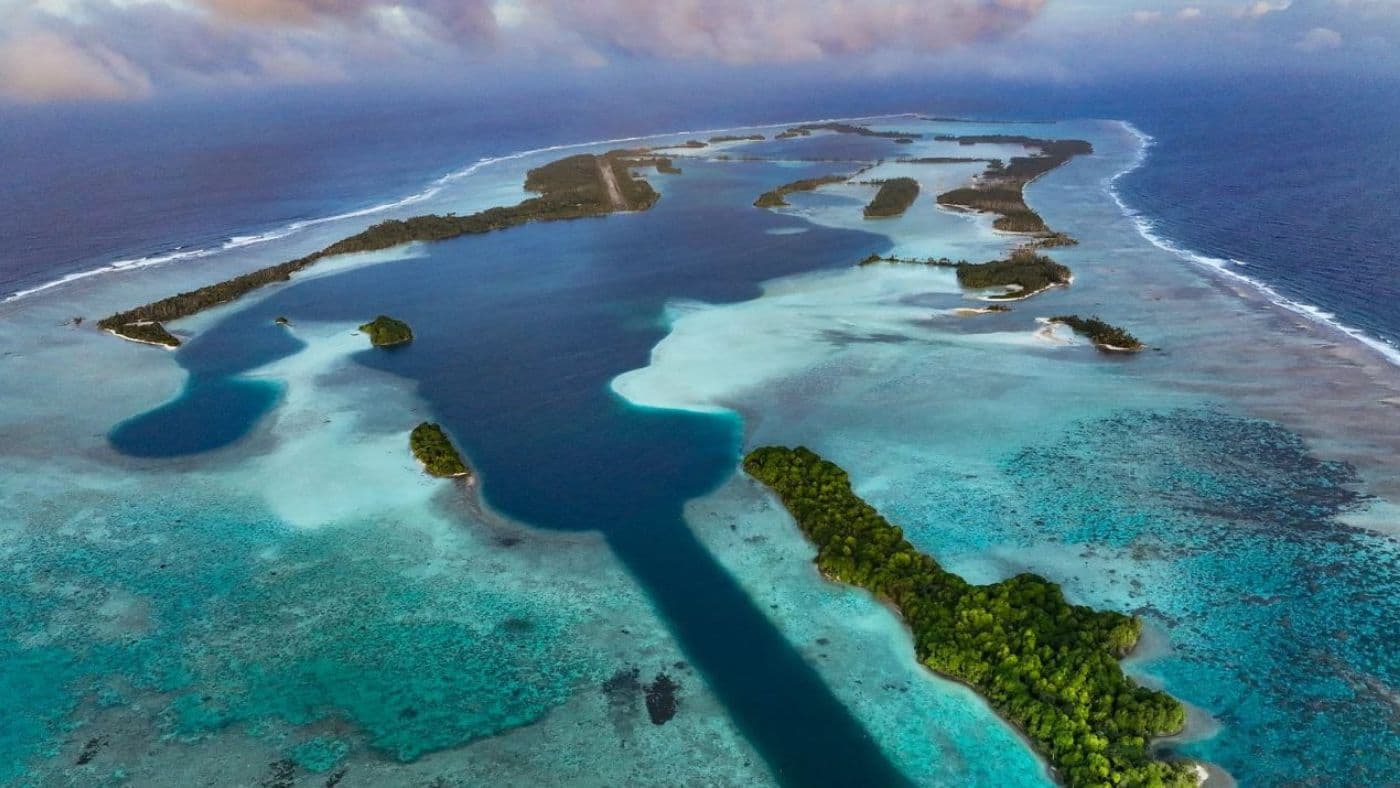
Palmyra Atoll
Why visit Palmyra Atoll
The Only One of Its Kind
Palmyra Atoll is unlike any other US territory. It is the only incorporated US territory that is not a state, meaning it carries the full application of the US Constitution, a distinction that has no practical consequence for most visitors but is a genuine legal curiosity. The atoll sits in the Line Islands in the central Pacific, about 1,600 kilometres south of Honolulu, and is jointly managed by the US Fish and Wildlife Service and the Nature Conservancy, which owns most of the land. It has no permanent civilian population but hosts a small rotating community of researchers and refuge staff.
One of the Healthiest Coral Systems Remaining
Palmyra's reef system is among the most studied and most intact in the Pacific. The atoll sits at the northern edge of the equatorial upwelling zone, which delivers nutrient-rich water and supports exceptional coral growth and fish biomass. Sharks are abundant, which is taken as a reliable indicator of ecosystem health. The surrounding waters form part of the Pacific Remote Islands Marine National Monument. Researchers from institutions around the world use Palmyra as a baseline site precisely because it represents what a coral reef can look like without chronic human pressure.
Tightly Controlled but Genuinely Accessible
Palmyra is one of the few US Minor Outlying Islands where civilian access is possible and actively, if carefully, managed. The Nature Conservancy runs a small ecotourism programme offering guided visits for divers and wildlife enthusiasts, with numbers strictly limited to protect the ecosystem. Access is by chartered flight from Hawaii. Accommodation is basic and functional rather than comfortable, and the experience is shaped entirely around the natural environment rather than visitor amenity. This is not a resort; it is a field station that occasionally accepts guests.
Remote, Remarkable and Worth the Effort
For divers and naturalists with the means and motivation to get there, Palmyra Atoll offers conditions that are genuinely difficult to find anywhere else. The combination of healthy sharks, abundant fish, intact coral and almost no other visitors produces an underwater experience that stands apart from anything available at more accessible destinations. It is expensive, logistically demanding and not for everyone. For the right traveller, it is exactly the right place.
Experiences in Palmyra Atoll
WānaTravel partners with Viator and GetYourGuide so you can browse and book experiences directly. Prefer a personal touch? Contact WānaTravel and we'll add it to your itinerary for you.
Practical Information
Travel essentials, government safety advisories and The Out Index score for Palmyra Atoll.