Canary Islands
Why visit Canary Islands
Where the trade winds never stop
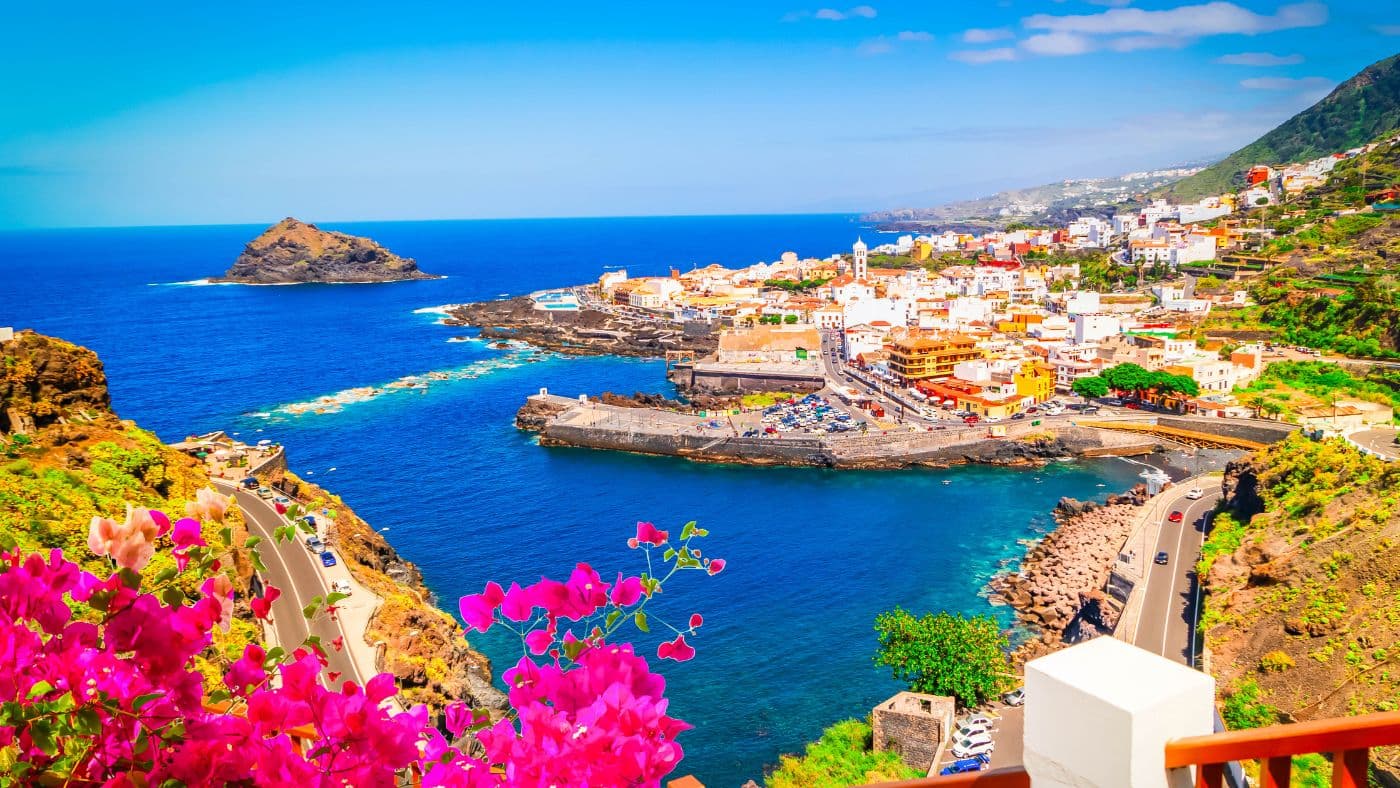
Strung across the Atlantic just off the Saharan coast, the Canary Islands sit at a latitude that has nothing to do with northern Europe yet everything to do with why northern Europeans keep coming back. Seven major islands, each shaped by volcanic forces working at their own pace, offer a geology lesson delivered in sunshine. Tenerife lords over the archipelago with Mount Teide, Spain's highest peak, poking through a sea of cloud while the coasts below bake in subtropical warmth. The islands share a climate but little else. Lanzarote looks like a moonscape dressed in vines. La Gomera folds itself into ravines so deep that locals once communicated across them by whistling.
Beaches that keep a secret
Gran Canaria has the dunes of Maspalomas, a small Sahara that spills straight into the Atlantic surf. Fuerteventura stretches its windswept shores for so long that surfers treat the whole island as a single break. Lanzarote rewards those who venture beyond the resort strips with black sand bays where the contrast between volcanic rock and turquoise water looks deliberately designed. Then there is La Palma, so quiet and so green that visitors often wonder whether they have taken a wrong turn into a cloud forest. Each island handles tourism differently, and none of them handles it quite the same as its neighbour.
A table that Atlantic and Africa built together
Canarian cooking has a personality entirely separate from mainland Spain. Gofio, a toasted grain flour that the Guanche people relied on long before the Spanish arrived, turns up in bread, soups and desserts with a nuttiness that grows on you. Papas arrugadas, the famously wrinkled small potatoes boiled in salt water, arrive at almost every table alongside mojo rojo and mojo verde, two sauces that locals treat as a fundamental human right. Fresh tuna from the Atlantic, grilled cheese from Fuerteventura and the local honey from La Palma round out a larder shaped by an island chain that sits equidistant between Europe and the tropics.
Carnivals, stargazing and the rest of the year
The Carnival of Santa Cruz de Tenerife is one of the largest in the world, a February spectacle that turns the capital into a parade of sequins, brass bands and very little sleep. Gran Canaria runs its own rival carnival with equal conviction. Outside of festival season, the islands operate as one of the world's finest stargazing destinations: the Teide Observatory sits above the clouds at nearly 2,400 metres, and the darkness up there is absolute. The Canaries never really have an off season. The weather that brings the package tourists in winter brings surfers, hikers and astronomers in every other month, and the islands accommodate all of them without too much fuss.
Experiences in Canary Islands
WānaTravel partners with Viator and GetYourGuide so you can browse and book experiences directly. Prefer a personal touch? Contact WānaTravel and we'll add it to your itinerary for you.
WānaTravel partners with Viator and GetYourGuide so you can browse and book experiences directly. Prefer a personal touch? Contact WānaTravel and we'll add it to your itinerary for you.
Practical Information
Travel essentials, government safety advisories and The Out Index score for Canary Islands.

Out Score of Canary Islands
Canary Islands has not received an Out Score yet.
Out Score of Canary Islands
Canary Islands has not received an Out Score yet.
N/A
Tier N/A