Ceuta
Why visit Ceuta
Where Two Continents Hold a Conversation
Ceuta sits on the northernmost tip of Africa, pressed against the Strait of Gibraltar like an ear to a door, listening to both continents at once. It is Spanish soil by law and African terrain by geography, a peculiarity that gives it an identity no atlas can quite contain. The old Portuguese walls still climb the hillsides, the morning call to prayer drifts over whitewashed rooftops, and the smell of churros mingles with that of Moroccan mint tea at the harbourside. Few places in the world wear two worlds quite so comfortably on a single set of shoulders.
A Fortress City With Layers to Spare
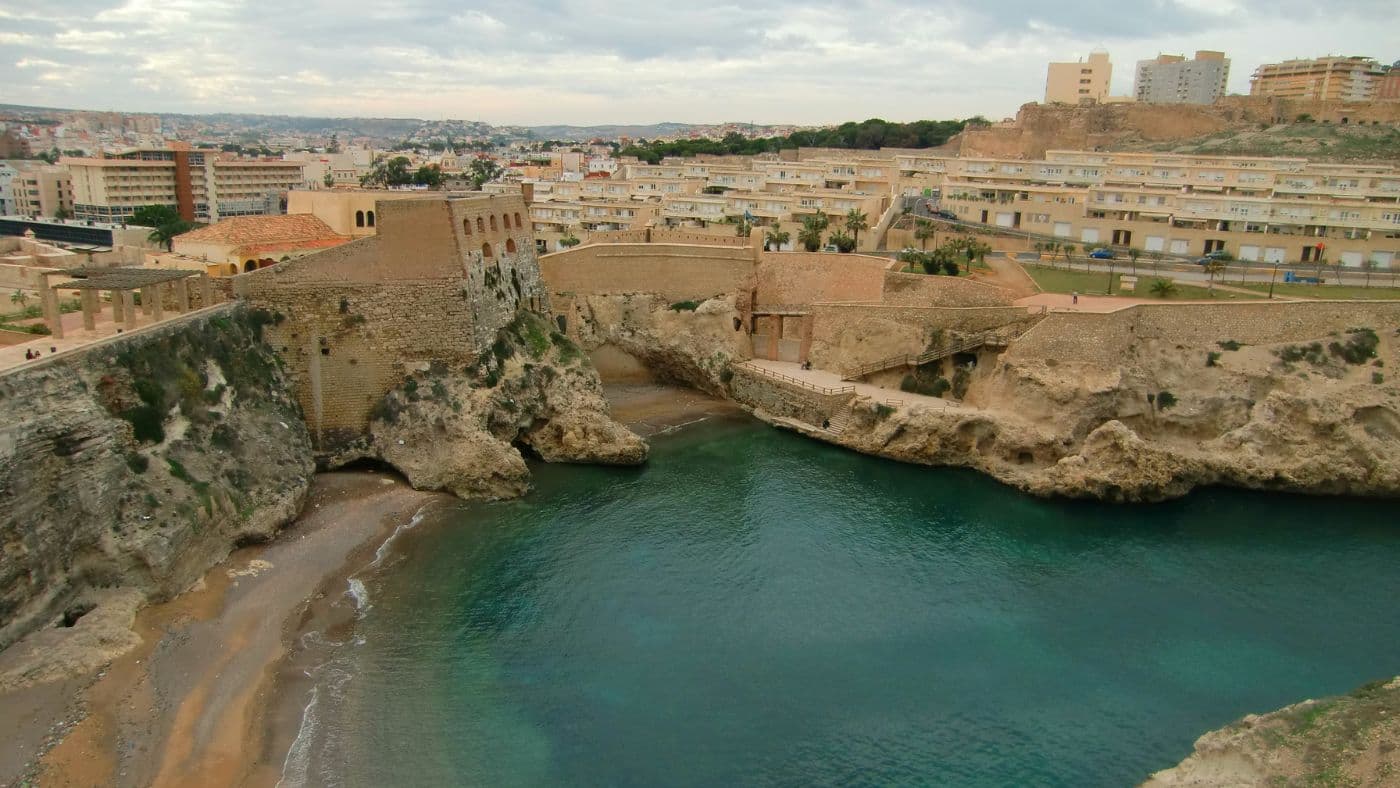
Ceuta has been wanted by an impressive number of empires over the centuries, which means it has been fortified with considerable enthusiasm. The Royal Walls, a grand medieval defensive system, snake through the city and include a moat fed by the sea. The Cathedral of Santa María de la Asunción was built over a mosque, which was itself built over a church, and the layers of devotion are visible in the stonework if you look with a curious eye. The Monte Hacho fortress watches over the strait from the eastern promontory, offering views that once gave admirals strategic advantage and now give visitors spectacular photographs.
Shopping, Seafood, and a Very Busy Border
Ceuta is a free port, which has historically made it a destination of considerable interest to shoppers from across the region. Electronics, perfume, and tobacco have long circulated here at prices that encourage leisurely browsing. The fish market is a reliable source of spectacular catches hauled from the strait, and the restaurants along the marina tend to cook them with a directness that lets the flavour do the talking. The border crossing into Morocco is one of the busiest in the world, a daily theatre of goods, people, and patient queuing that has its own particular rhythm.
Getting There and Getting Your Bearings
Ceuta has no commercial airport, so most visitors arrive by ferry from Algeciras on the Spanish mainland, a crossing of around 35 to 90 minutes depending on the service. Ferries also run from Tarifa for those who prefer a shorter crossing. Once in the city, most of the historical centre is walkable, and the compact layout rewards visitors who arrive without a fixed itinerary and simply follow streets until something interesting presents itself, which in Ceuta tends to happen rather quickly.
Experiences in Ceuta
WānaTravel partners with Viator and GetYourGuide so you can browse and book experiences directly. Prefer a personal touch? Contact WānaTravel and we'll add it to your itinerary for you.
WānaTravel partners with Viator and GetYourGuide so you can browse and book experiences directly. Prefer a personal touch? Contact WānaTravel and we'll add it to your itinerary for you.
Practical Information
Travel essentials, government safety advisories and The Out Index score for Ceuta.

Out Score of Ceuta
Ceuta has not received an Out Score yet.
Out Score of Ceuta
Ceuta has not received an Out Score yet.
N/A
Tier N/A