Wake Island
Why visit Wake Island
Eleven Days That Held the Pacific
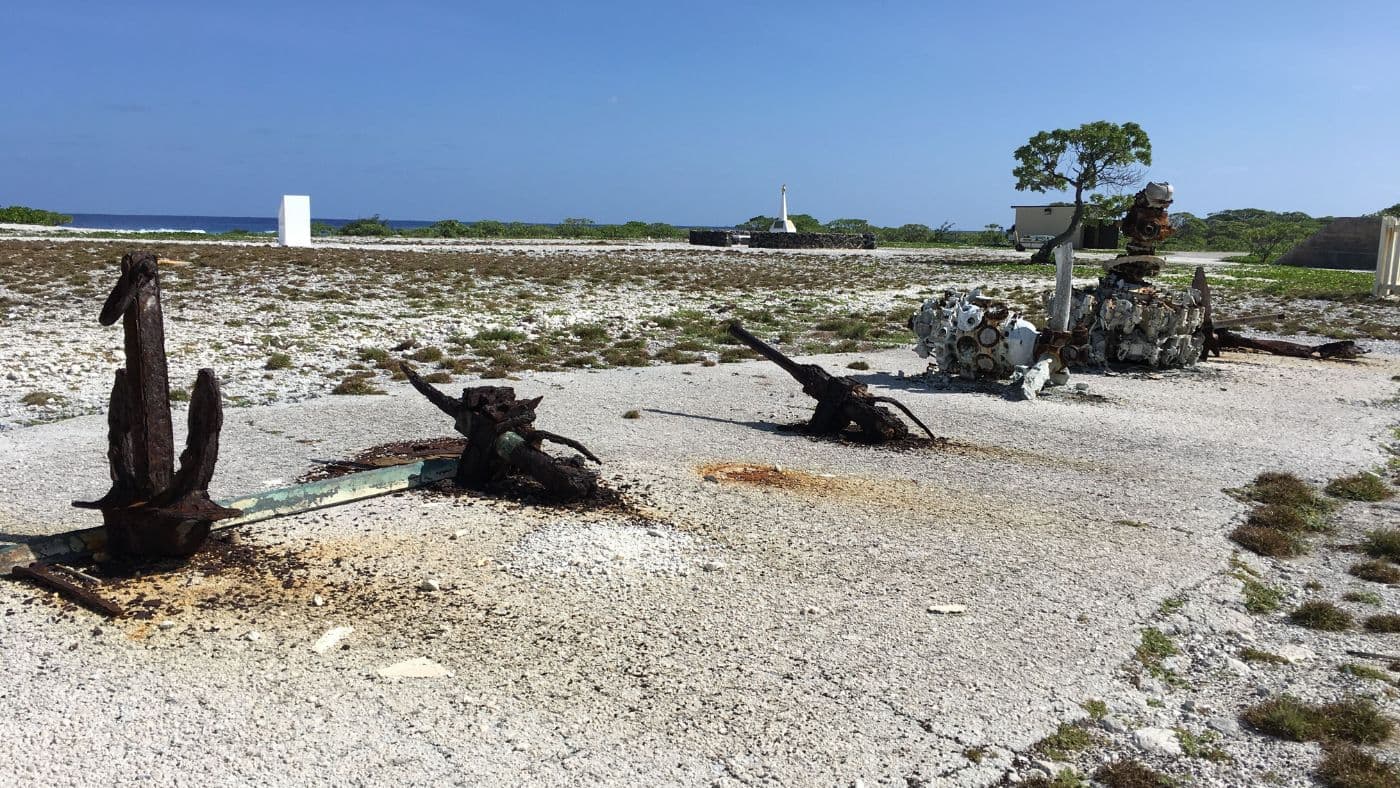
Wake Island entered the history books in December 1941, when a small garrison of US Marines and civilian contractors held the atoll against a Japanese assault for fifteen days before being overwhelmed. The defence of Wake became one of the most celebrated actions of the early Pacific War, carried out with almost no air support, no naval relief and dwindling ammunition against a force that returned in greater strength after its initial repulse. Japan occupied the atoll for the remainder of the war, and the US has administered it as a military installation ever since.
An Active Military Installation
Wake Island remains under the jurisdiction of the US Air Force and is an active, if lightly staffed, military facility. A small rotating population of military personnel and contractors maintains the airfield and associated infrastructure. The airfield has served as an emergency diversion point for transpacific flights and was used as a staging base during several 20th-century conflicts. There is no civilian population and no pathway for public access. The atoll consists of three small islands, Wake, Wilkes and Peale, arranged around a lagoon that is no longer navigable by large vessels.
Closed to Visitors Without Exception
Unlike some US Minor Outlying Islands where scientific permits exist in principle, Wake Island has no civilian access programme of any kind. Entry requires military authorisation, which is not available to the general public or to researchers outside specific sanctioned programmes. The surrounding waters and reef system are largely unstudied compared to other remote Pacific atolls for this reason. What the restriction has preserved ecologically is largely unknown.
A Strategic Dot Across the Date Line
Wake Island sits in the North Pacific about a third of the way between Hawaii and Guam, west of the International Date Line and observing UTC+12. This places it a full day ahead of the US mainland, a geographic quirk that has occasionally created administrative curiosities around its formal territorial status. It is one of the United States Minor Outlying Islands in name, though its character is entirely military rather than ecological or civilian, and it is included here as a complete record of US jurisdiction in the Pacific.
Experiences in Wake Island
WānaTravel partners with Viator and GetYourGuide so you can browse and book experiences directly. Prefer a personal touch? Contact WānaTravel and we'll add it to your itinerary for you.
Practical Information
Travel essentials, government safety advisories and The Out Index score for Wake Island.